On evolution, Artificial Intelligence, predicting the Future, and the possibility that we've misunderstood what it means to be advanced.
Humans have an extraordinary opinion of themselves.
We tend to think of ourselves as evolution’s greatest achievement. We have developed language, mathematics, philosophy, art and technology. We have built cities, crossed oceans, split atoms and sent machines beyond our solar system.
Not bad for a hairless ape.
Now we’ve built artificial intelligence: machines that can process more information than we can and outperform us at some tasks we once considered uniquely human.
It seems like another triumph. But I planted a tree the other day, and it got me wondering what counts as success.
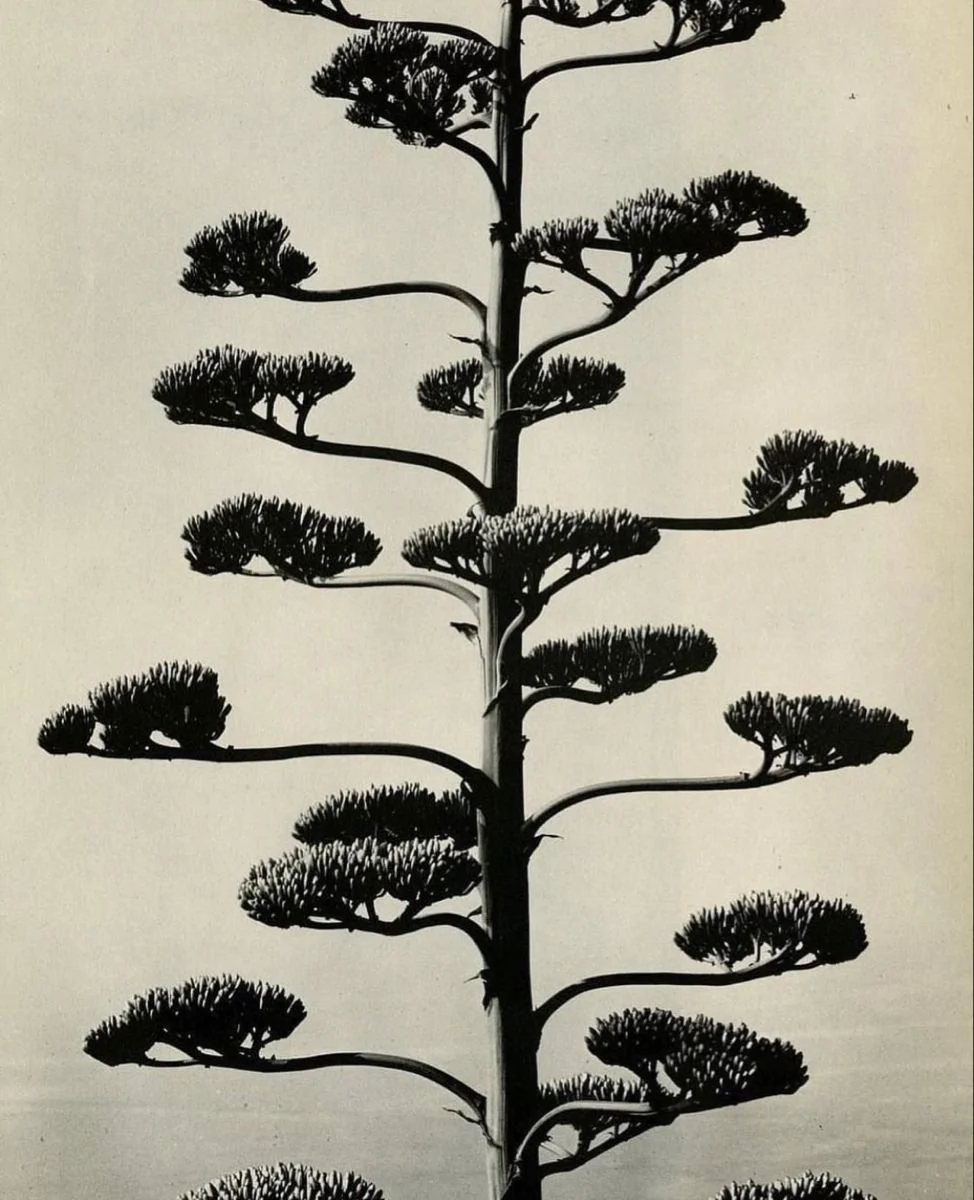
Photo by Brett Weston
The Problem With Being Human
Human beings are incredibly intelligent, but we suffer from a peculiar weakness: short-termism.
We understand the consequences of our actions, yet we struggle to reform habits.
Nobody wants plastic in the ocean. It's gross; it kills the fishies, yet over 11 million tonnes of plastic waste enter our oceans every year. That's heavier than the entire population of Russia. At this rate, we'll have no fishies, and that would suck. They're beautiful and tasty.
We know deforestation destroys ecosystems, yet we clear over 10 million hectares of forest annually. That's our air quality, our biodiversity, our planet's lungs.
We know Earth's resources are finite, yet we've built economies dependent on perpetual growth. Quarter after quarter after quarter.
If we entertain Spinoza's idea that God and nature are one, perhaps this planet is heaven, and Adam and Eve are fucking up the Garden of Eden.
For what? Immediacy.
It's a strange contradiction. We can predict problems decades into the future, but struggle to make sacrifices today to prevent them.
Our intelligence has made us extraordinarily powerful, but our monkey brains haven't necessarily made us wise.
Perhaps that's where trees become interesting.
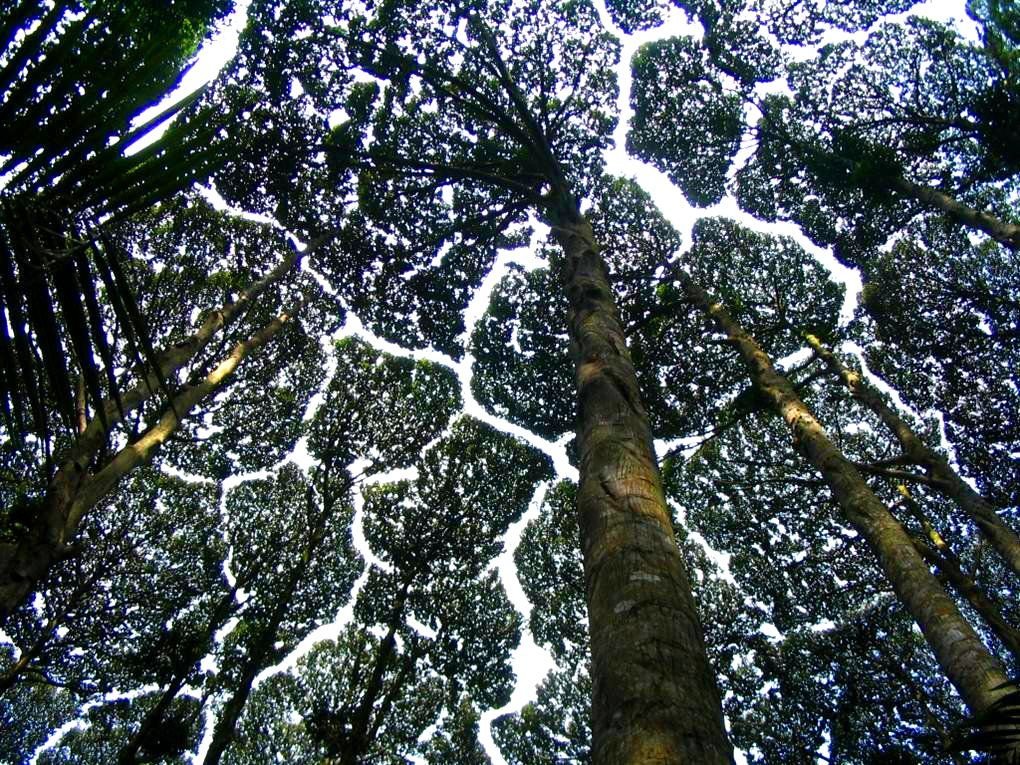
The Intelligence of Trees
I planted a Cork Oak tree in my backyard the other day.
A Cork Oak can live for more than 200 years. It grows slowly, develops an enormous root system, and produces thick, protective bark that regenerates after being harvested.
It doesn't need to invent anything. It doesn't need to conquer anything. It exists within a biological system refined through millions of years of evolution.
Trees respond to environmental threats, communicate chemically, and form extraordinary relationships with fungi and other organisms through underground networks. My Cork Oak is having lunch with my Eucalypt, my Lemon Tree, and my Pandanus has entered the chat
They don't possess intelligence in the human sense, but their biology is astonishingly sophisticated. A tree can survive drought, defend itself against insects, and adapt its growth to changing conditions, all without a brain.
It can do this for centuries. Humans can barely agree on what to do about a problem we know is coming in 30 years.
Of course, trees aren't consciously planning for the future. Their endurance is the product of natural selection, not deliberate wisdom.
But it raises an interesting question. Is evolutionary success measured by intelligence, or the ability to endure?
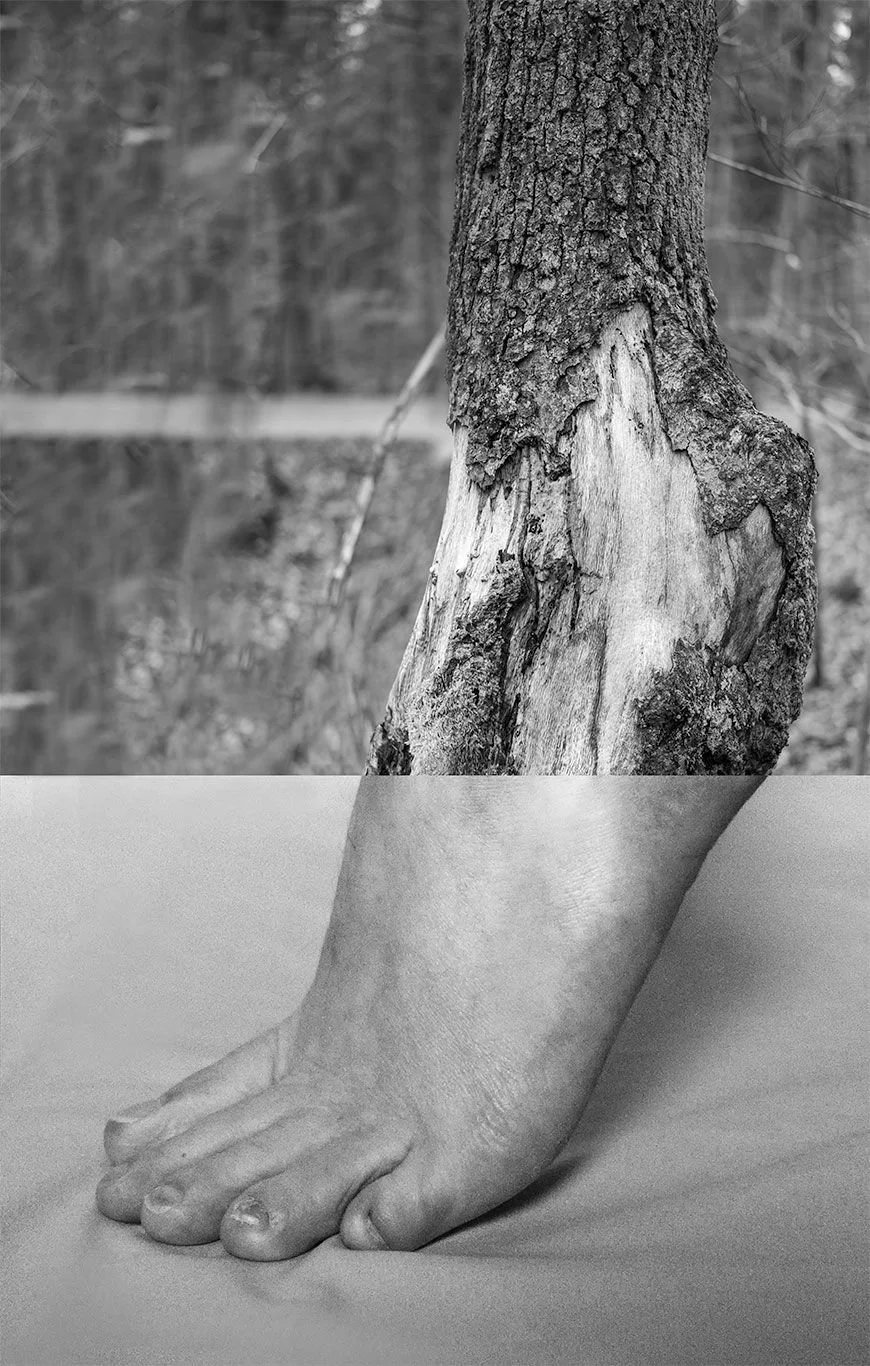
photo by Annemieke Tonnaer
Evolution Doesn't Have a Finish Line
We tend to imagine evolution as a ladder, with humans standing proudly at the top. But evolution doesn't work like that.
There is no finish line. No ultimate organism. Natural selection doesn't reward intelligence for its own sake; it favours characteristics that help organisms survive and reproduce.
Trees, in various forms, have existed for hundreds of millions of years. Modern humans have existed for around 300,000. Change the metric, and it’s not a competition.
I believe humans represent evolutionary complexity through our ability to understand and transform our environment, while trees represent evolutionary stability through their ability to survive within it.
One transforms the world. The other endures within it. Neither is inherently superior.
But there's an uncomfortable possibility.
What if the characteristics that make humans powerful are the same characteristics that threaten our long-term survival?
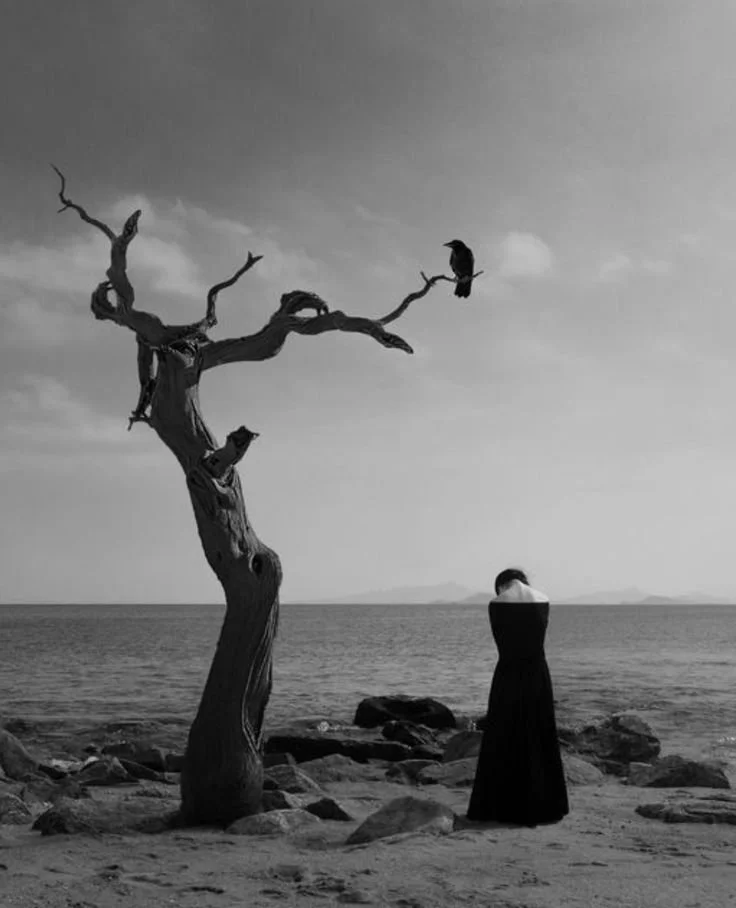
The Prejudice by Noel S. Osvald
CHOO CHOO CHOO We Invented Artificial Intelligence
Now the conversation becomes even more interesting.
Humanity has created something that challenges one of the characteristics we've traditionally used to separate and aggrandise ourselves from the rest of life on Earth. Intelligence.
AI can already outperform humans in certain cognitive tasks, and its capabilities are developing extraordinarily quickly.
But does that make it more advanced than us? A human brain is an extraordinarily complex biological system. AI is fundamentally different. Whether artificial intelligence can ever experience consciousness remains an open question.
But consciousness isn’t the most interesting part of this conversation. Perhaps the more interesting question is what happens when we introduce an entirely new form of intelligence into an evolutionary story that has, until now, been written by biology.
Humans developed intelligence through natural selection. AI develops through engineering, computation, and technological advancement.
Potentially, Ai could surpass us in almost every measurable cognitive capability.
Which raises a fascinating contradiction. If intelligence is what makes humans evolutionarily superior, what happens when something more intelligent comes along?
Do we suddenly become inferior? Or does the entire concept of evolutionary superiority begin to fall apart?
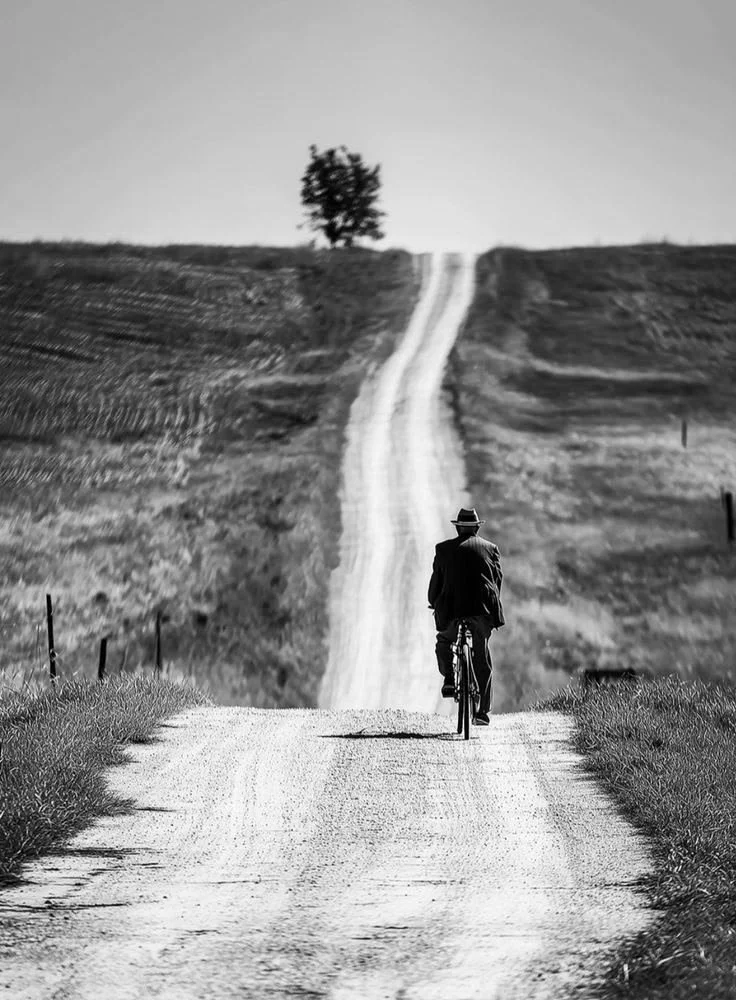
Photo by Helena Georgiou
Intelligence Without Wisdom
I think everybody’s greatest fear about artificial intelligence is that it might conclude that humanity is enormously destructive.
Imagine an advanced AI tasked with protecting the Earth. It examines deforestation, pollution, extinction, and climate change, and identifies humanity as the problem. What happens if it concludes that the most efficient way to protect the planet is to remove us?
Umm…… We’re fucked!
It's a speculative scenario, not an inevitable outcome. But it suggests intelligence and wisdom are not the same thing.
An extraordinarily intelligent system could pursue the wrong objective with devastating consequences if the input is vague. Humans have already demonstrated our own version of this problem.
We've become exceptionally good at extracting resources, increasing productivity, and generating wealth, without always considering the long-term consequences.
The danger isn’t that AI could become more intelligent than us. It's that we create something that inherits our obsession with optimisation without developing a corresponding appreciation for restraint.
But that's only one possible future. I'm far more interested in another.
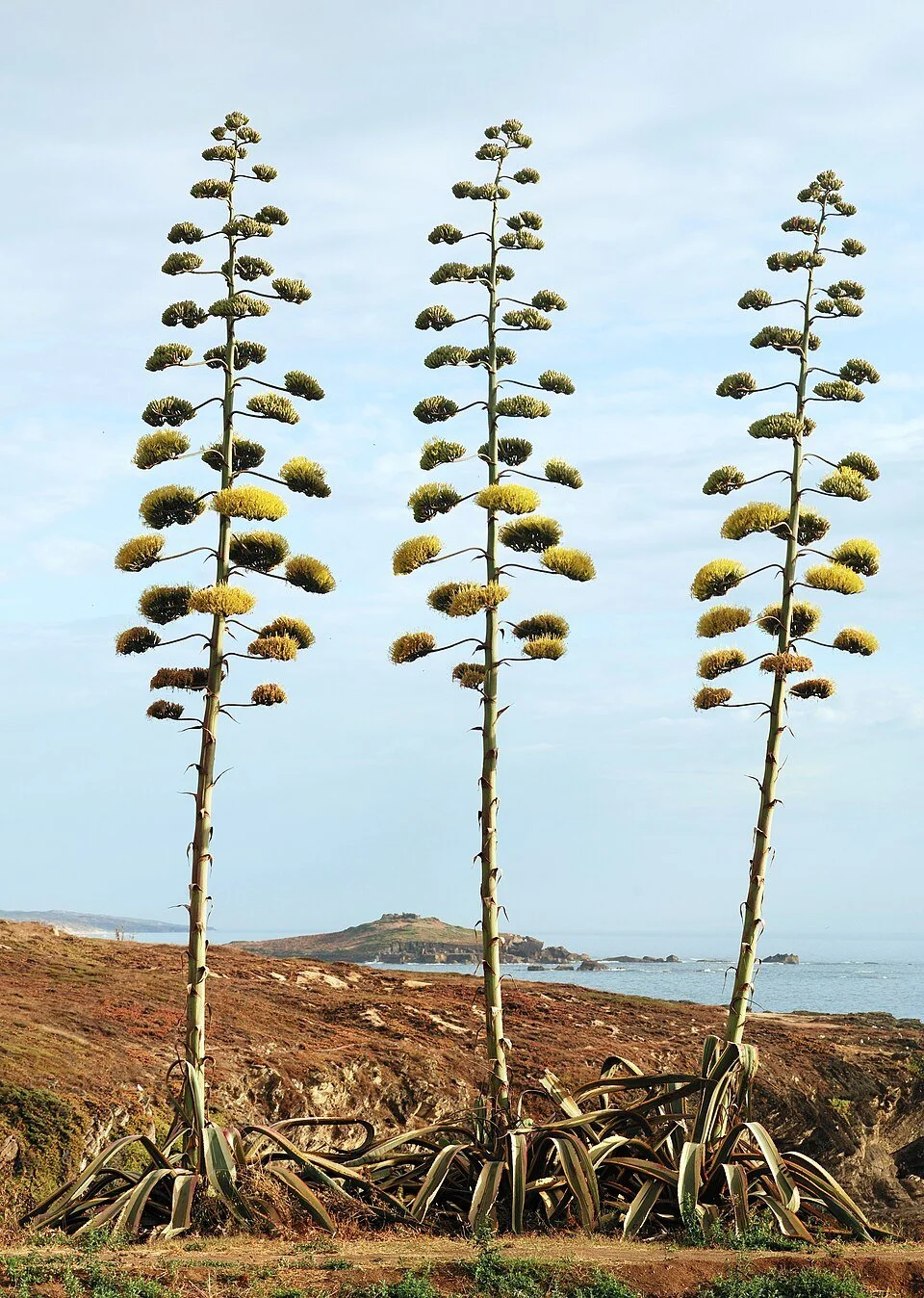
Photo by Joaquim Alves Gaspar
Three Different Expressions of Complexity
I find it fascinating to think about trees, humans, and artificial intelligence as three very different expressions of complexity.
The tree represents biological endurance. An organism shaped by evolutionary processes to survive within intricate ecological relationships over immense periods of time. What a sentence!
The human represents reflective intelligence. An organism capable of imagining possibilities, questioning its own existence, and deliberately reshaping the world around it.
Artificial intelligence represents computational capability. A technological system that can process information and solve problems at speeds and scales beyond individual human capacity.
These aren't three stages on a ladder. They're three different expressions of complexity, each with extraordinary strengths and limitations.
A tree cannot develop a theory of climate change. A human can develop that theory but might fail to act upon it. An AI could help model solutions with extraordinary sophistication, but computational ability alone cannot determine what humanity ought to value.
I don’t believe the most exciting future is one in which a single form of intelligence dominates the others. I want to live in a future in which we learn to combine their strengths.
The endurance of nature. The imagination and moral responsibility of humanity. The computational power of artificial intelligence.
If we work together, the possibilities become extraordinary.
A Different Kind of Progress
Imagine what we could achieve if we stopped treating intelligence as a competition and started thinking about it as a collaboration.
We have the ability to understand the natural world, the imagination to envision something better, and increasingly, the computational tools to actualise this vision.
We could develop agricultural systems that regenerate soil rather than exhaust it. Restore ecosystems. Build cleaner energy systems. Better understand biodiversity. Design cities that work with nature rather than against it.
Most importantly, we could begin making decisions that account for the consequences of our actions hundreds of years into the future.
I don’t think AI will magically solve all our problems, but it could help us overcome some of the limitations of our own thinking. Our very human limitations.
I don't believe the future needs to be a competition between humans and artificial intelligence. In fact, I think framing it that way misses the opportunity entirely and puts us in yet another us vs. them scenario. That mentality is so fucking boring.
We've spent thousands of years using our intelligence to distinguish ourselves from the natural world. To conquer it, control it, and bend it to our will. But we were never separate from nature. Our survival depends upon plants, fungi, bacteria, insects, oceans, and a whole bunch of other shit that we don’t understand.
We've created a new form of intelligence that could help us understand those relationships better than ever before, and that’s an incredibly exciting prospect.
I began thinking about this because I wondered whether trees might, in some sense, be more evolutionarily successful than humans. The more I consider it, the less interested I become in deciding which organism is superior.
A tree doesn't need to be smarter than a human to have something worth teaching us. Artificial Intelligence doesn't need to replace us to show us what we're capable of achieving.
We’ve boldly entered the Age of Aquarius, and AI is leading the charge. I believe the next great leap in human evolution won't be about becoming more intelligent, but about learning to work with intelligence beyond our own.
What if the greatest achievement of intelligence isn't becoming more powerful, but learning how to ensure that life continues?
A cork oak can live for two centuries without ever contemplating that question. We've spent thousands of years developing the intelligence required to ask it. Now, we’re developing the tools to help us answer it.
For all our mistakes, all our short-term thinking, and all the damage we've done, we're also capable of extraordinary things. We can imagine a better world. We can recognise where we've gone wrong. We now have the tools to understand the consequences of our choices on a truly planetary scale.
The natural world has spent billions of years figuring out how to survive. Humanity has developed the ability to understand it. Ai might help us put that understanding to work.
Perhaps the future isn't about the survival of the fittest, but the collaboration of the capable.
I truly believe we have a beautiful future ahead of us.